MANUS CONSULT
Interntional
About me
Welcome to my Website
The Strategist
The Foundation
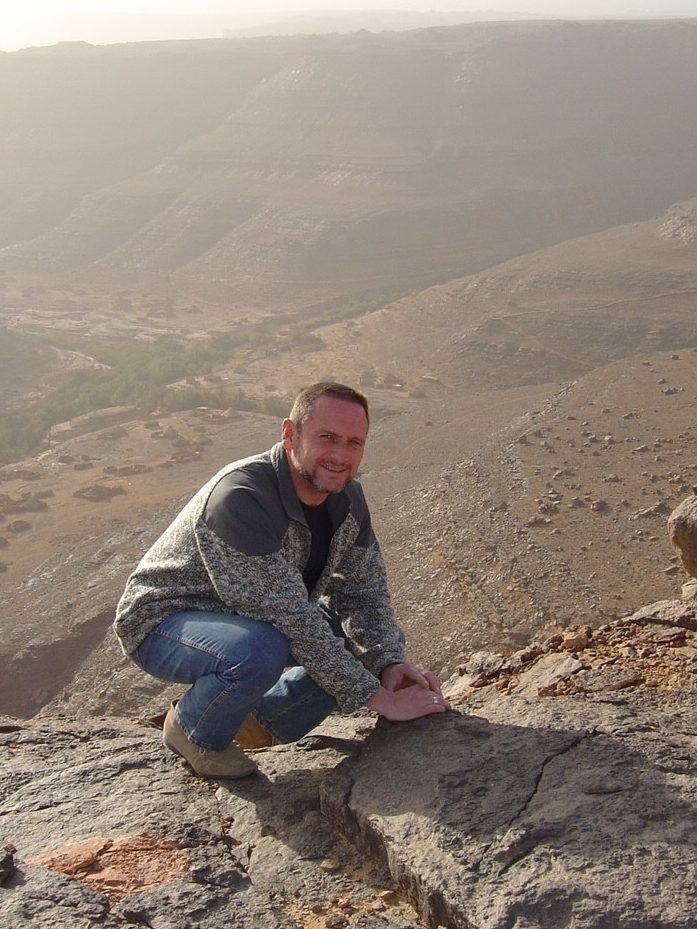
With a Master’s in International Policies & Diplomacy and my current specialisation in strategic risk management, I do not view crises merely operationally, but always within a broader political and global context.
Twelve years of military experience across three continents have taught me what it means to take responsibility and to make clear, ethically sound decisions even under extreme pressure
The Mediator
Also...
During my many years of work in Algeria, I learned that security often arises where there is mutual understanding. I act as an interface between multinational teams and governmental or military authorities. I speak German, English, and French – but above all, I speak the language of diplomacy.
Who I am when I am not managing crises
A complex environment requires a sharp mind. To recharge my batteries and sharpen my focus, I devote myself to things that may seem far removed from security technology at first glance, but which provide me with the necessary balance:
L
When we talk about security and crisis management, the conversation usually revolves around protocols and risk maps. For me, it is about more: it is about trust. For over 20 years, I have operated in high-risk areas – from the vast expanses of Africa to international crisis task forces. My job is to bring calm to the chaos and to ensure that organisations remain operational even in the most challenging environments.
What sets me apart: The fusion of precision and empathy
My career path has not been a straight line, but a conscious journey across disciplines and continents:
L
Let’s work together
Are you looking for someone who does not just secure your projects abroad, but enables them through cultural sensitivity and strategic foresight?
Feel free to contact me
Lead@manusconsultint.com
At the Cello: Practising classical music requires the same discipline and precision as a sound security concept – and offers a wonderful creative outlet.
In History: My deep interest in African colonial and post-colonial history helps me to truly grasp the dynamics of the regions in which I work.
Physical and Electronic Security:
Practical Foundations for Organizational Resilience
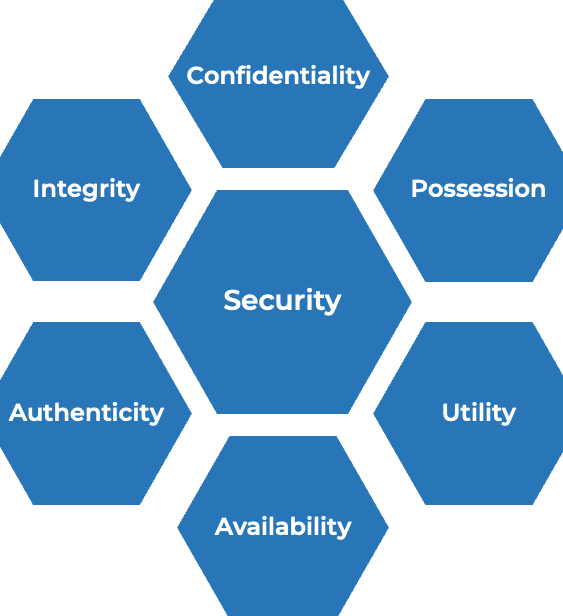
Integrated Protection Physical security and IT security are two sides of the same protection strategy.
Both must be coordinated to protect people, facilities, and digital assets.
Unified Approach: Policies, incident procedures, and governance align across physical and electronic domains.
• Shared Responsibility: Security is owned by the organization, not isolated teams.
Preventive Measures Focus on practical, proportionate controls that reduce likelihood and impact.
• Access Control: Secure physical entry (badges, biometrics) and logical access (MFA, least privilege).
• Hardening: Patch management, antivirus, network segmentation, CCTV placement, and secure lighting.
Detection and Early Response Rapid detection shortens incident lifecycles and limits damage.
• Monitoring: Integrated logs and sensors feed centralized monitoring for both OT/physical and IT environments.
• Automated Alerts: Correlated alerts trigger predefined playbooks that involve both physical and cyber responders.
Incident Coordination When incidents cross domains, response must be seamless.
• Joint War Room: Shared communication channels and a single incident leader ensure coordinated decisions.
• Clear Escalation Paths: Defined roles and thresholds for involving executive, legal, and external partners.
Resilience and Recovery Design systems so critical operations can continue and recover quickly.
• Redundancy & Backups: Diverse power, network routes, and regular offsite backups for critical data.
• Restore Testing: Regular drills for combined physical-cyber scenarios to validate recovery plans.
Human Factors and Culture People are the first line of defense.
• Training & Awareness: Practical, role-specific exercises for staff and security teams.
• Reporting Culture: Simple, no-blame reporting channels for suspicious activity or near-misses.
In short: align physical and IT security into a cohesive, proportionate program that prevents, detects, and recovers — enabling the business to operate safely and confidently.
Modern and Efficient Business Risk Management
From "Avoidance" to "Intelligent Risk"
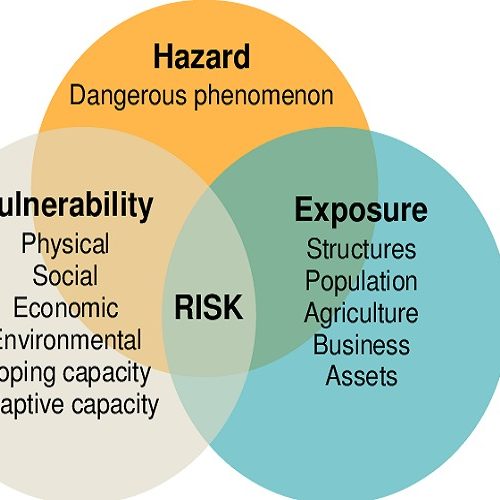
The goal is no longer just to prevent risks, but to understand that taking calculated risks is necessary for growth.
Risk Appetite Defined: Management clearly defines how much risk is acceptable for specific opportunities.
Opportunity Management: Every risk is assessed for potential upside (e.g., not using new, risky AI tech might be the bigger risk).
Data-Driven Real-Time Analysis
Gone are the days of quarterly Excel spreadsheets. BRM is continuous and dynamic.
- Continuous Risk Monitoring: AI systems feed dashboards around the clock with data from the global economy, politics, climate trends, and internal processes.
- Predictive Analytics: AI calculates future probabilities (e.g., "There is a 70% probability this supplier will have issues in 3 months").
Connected Thinking
Risks don't exist in a vacuum. An IT risk today is almost certainly a financial and a reputational risk too.
- Enterprise Risk Management (ERM): All risks are centralized, breaking down traditional silos (Finance vs. IT vs. HR).
- Dependency Mapping: Modern systems visually show how a small supply chain issue can trigger a cascade of events across the business.
Dynamic Risk Culture
Risk management is embedded in the company's DNA, not confined to one department.
- Bottom-Up Reporting: Frontline employees have simple tools to report observations instantly.
- Psychological Safety: The culture encourages open discussion about risks and errors without fear of punishment.
Resilience through Scenario Planning
Instead of just waiting for one event, companies play "what-if" scenarios.
- Digital Twins: Organizations simulate shocks (e.g., a total power outage or new trade tariffs) on digital replicas of their operations to test impacts before they happen in reality.

Modern and Efficient Business Crisis Management
1. From Rigidity to Resilience
Crisis management is no longer a thick binder collecting dust
on a shelf. It's about a company's living ability to adapt and
pivot.
Business Resilience: The goal is not just to survive a crisis (like a
cyberattack, pandemic, or supply chain disruption) but to
emerge stronger.
Adaptive Planning: Plans are modular. The focus shifts from
planning for one specific scenario to maintaining critical
functions, regardless of the incident.
2. Early Detection via "Horizon Scanning"
Modern BCM uses data to spot crises before they hit.
AI Early Warning Systems: Companies use AI tools that scan
news, social media, and supply chain data in real-time to
predict instabilities.
Proactive Alerting: When a risk is identified, stakeholders are
automatically alerted, often before the first signs of damage
appear.
3. Digital Crisis Response (The Digital "War Room")
When a crisis hits, every second counts. Companies use digital platforms for coordination.
Real-Time Communication: Instead of traditional phone trees, secure apps coordinate the crisis team instantly, ensuring everyone sees the same information.
Pre-defined Playbooks: Digital guides automatically assign tasks to the right people for various incident types.
4. Transparent Communication (Stakeholder Trust)
In a connected world, information is everything.
Honesty & Speed: Silence during a crisis is fatal. Modern crisis managers communicate immediately, openly, and across all channels.
Social Media Management: Teams actively counter rumors online to maintain control of the narrative.
5. Post-Crisis Learning
After the crisis is before the crisis.
Debriefing: A thorough analysis of what worked and what didn't.
Feedback Loop: Lessons learned are immediately fed back into security and business strategies to strengthen future defenses.
In short: Modern crisis management is a sophisticated autopilot system that detects turbulence early, adjusts the route instantly, and ensures passengers arrive safely even if an engine fails.
Strategic Resilience
Security as the Foundation for Business Freedom
In a global landscape defined by volatility and rapid change, business success is no longer measured solely by growth, but by resilience. The ability to absorb shocks, adapt to disruptions, and emerge stronger is a decisive competitive advantage in 2026.
True resilience is achieved when we stop viewing Risk, Crisis, and Security management as administrative silos and start seeing them as an integrated leadership framework.
1. Risk Management
Foresight as a Driver for Growth
We do not view uncertainty as a threat, but as a manageable constant. Proactive risk management is about identifying vulnerabilities before they impact our core operations. It allows us to calibrate our "risk appetite" strategically: understanding how much uncertainty we are willing to accept to seize new opportunities.
2. Crisis Management - Agility Under Pressure
Despite the best prevention, disruptions are sometimes inevitable. Professional crisis management is the art of maintaining stability and agility when time is critical. By prioritizing transparency and decisive action, we safeguard our most valuable asset: the trust of our employees, customers, and stakeholders.
3. Security Management - Our Integrated Shield
Security is not an end in itself; it is the enabler of our mission. It serves as the bridge protecting our physical, digital, and human assets. As leaders, this is rooted in our moral and legal "duty of care"—ensuring that our people and operations remain safe and functional every day.
From Compliance to a Culture of Awareness
True organizational strength is not built by merely checking boxes for compliance. It is built by embedding a risk-aware culture where every member of the organization is an active participant.
In essence:
- Risk Management is about prevention through foresight.
- Crisis Management is about recovery through agility.
- Security Management is about protection through continuity.
Let us view security not as a cost center, but as the "immune system" of our organization—one that empowers us to navigate uncertainty with confidence and thrive in a complex world.


And finally, as we reach the end...
Conclusion for you as CEO
Modern security management is the convergence of physical protection and digital defence. It protects your most valuable assets – people, property and data – thereby ensuring the operational capability and reputation of your company in an increasingly volatile world.